

Clubhouse: DESIGNING ARCHITECTURE AS AN EXPERIENCE
Set within a prestigious neighborhood just north of Toronto, backing directly onto the 18th hole of the National Golf Club of Canada, the Clubhouse project is rooted in a simple but powerful belief: architecture should respond to its site not only visually, but experientially.
This was an irreplaceable lot. To flatten it, turn away from the views, or impose a conventional solution would have ignored the very qualities that made the site exceptional. Instead, the design embraces the land, the landscape, and the daily rituals of moving through space—using site-specific design as a framework for creating moments that unfold over time. This philosophy of working with the land’s logic is a defining feature of our most successful contemporary cottage homes.
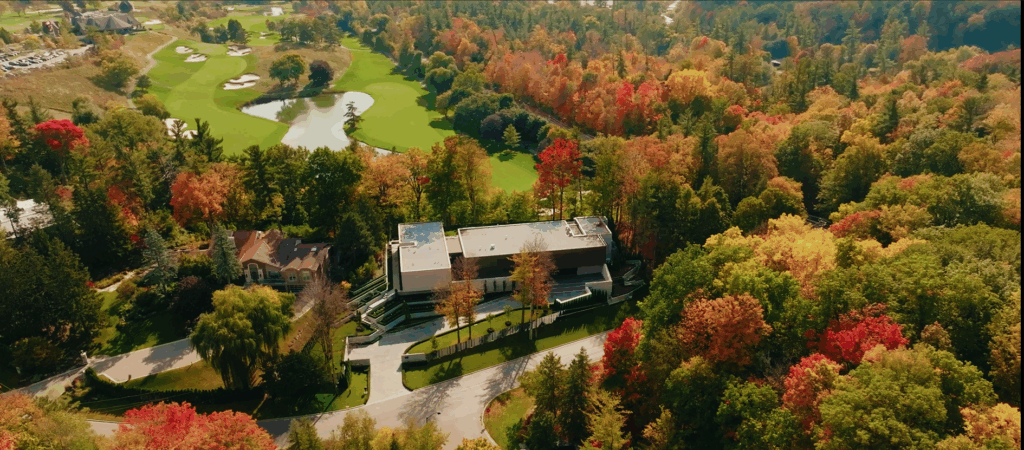
Letting the Site Lead
From the outset, the project resisted traditional residential cues. Approaching the home from the street, the focus is not on a front door, garage, or façade hierarchy, but on form and composition. The architecture presents itself as a sculptural sequence rather than a set of instructions. The Clubhouse residence exemplifies our broader architect’s perspective on how form and function should respond to unique site challenges.
“This was an irreplaceable site—one that demanded a response rooted in experience rather than convention.”
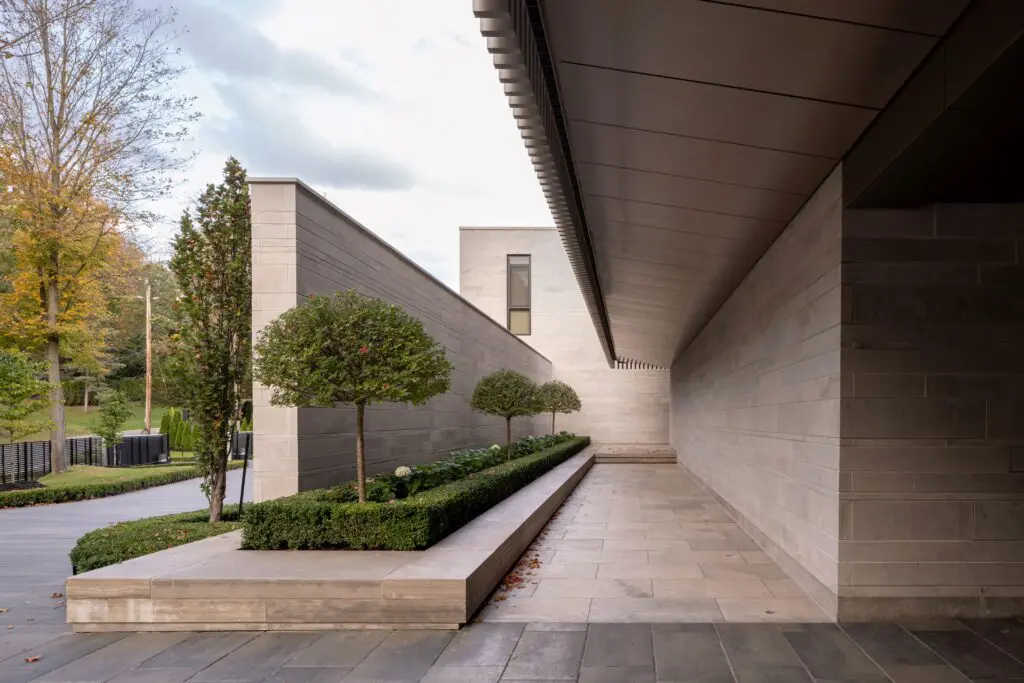
A promenade-like gallery leads visitors toward the entrance, flanked by a wall that quietly performs multiple roles. It provides privacy and acts as an acoustic buffer from the road, gradually shifting the sensory experience. Sound softens. Voices echo. The space encourages pause. By the time one reaches the front door, the environment has already changed. Explore how site-specific design informs our residential work → View related projects
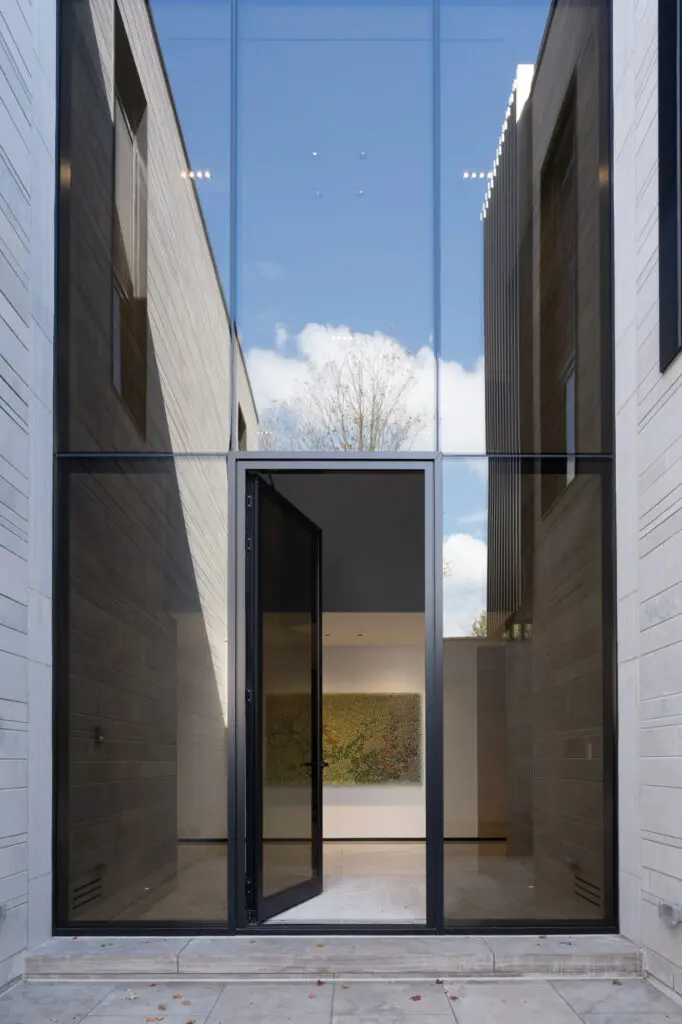
The entry itself is marked by a large glass wall and door—transparent, welcoming, and intentional—drawing visitors into the first architectural moment of the home
Elevation as Experience
Unlike most homes, where staircases are optional or secondary, movement through this house is choreographed. Every visitor must ascend to reach the main living level. Rather than hide this necessity, the design celebrates it.
The feature staircase becomes both object and experience. Its geometry, proportions, and detailing were carefully studied, particularly the guard height and transitions, which subtly rise and blend as one approaches the landing. The result is a fluid, sensual line that guides movement upward, creating a sense of anticipation and arrival.

It’s not just circulation—it’s architecture performing. This project reflects our approach to thoughtful, site-specific design. Learn more about how we work.
Framing Light, Views, and Daily Life
At the main level, the entire rear of the home opens to floor-to-ceiling glass, deliberately oriented toward the golf course and surrounding landscape. This expansive glazing allows the house to register seasonal change—light shifts, foliage evolves, snow transforms the view—making time a visible and integral part of the architecture.
“Architecture here is not about a single gesture, but a sequence of moments shaped by movement, light, and place.”
The living room anchors the main floor, spanning the full depth of the building. At its heart sits a custom-designed fireplace with a 12-foot fire opening, fully encapsulated in marble. The firebox is drawn low, emphasizing horizontality and reinforcing the relationship between warmth, view, and gathering.
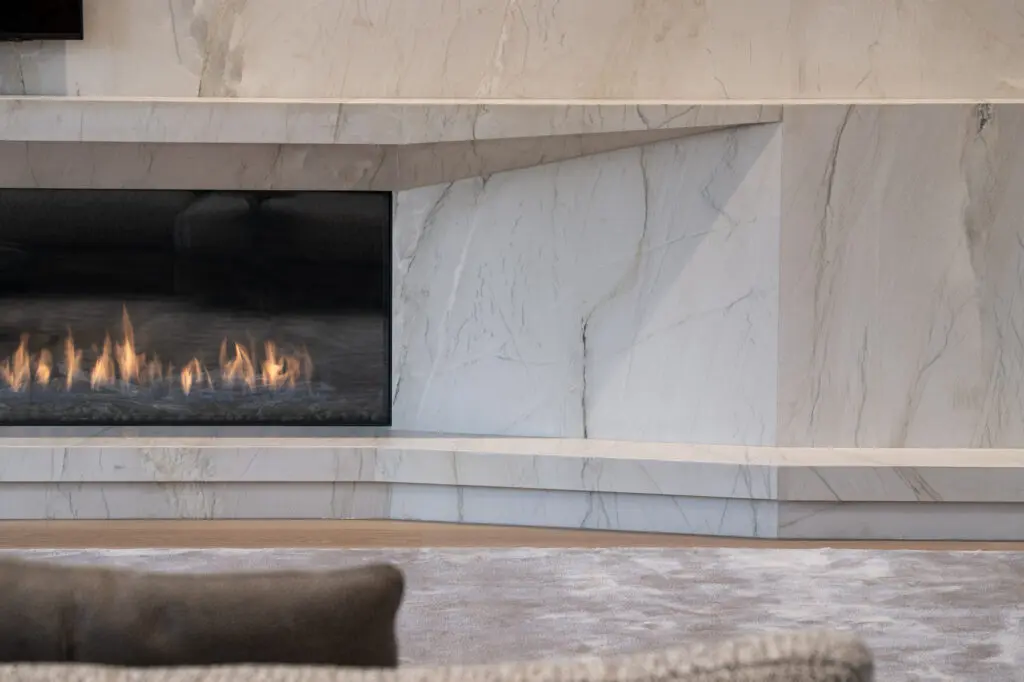
Material restraint plays a critical role here. Rather than layering finishes, the palette was intentionally limited—quartzite stone and white oak—allowing light and shadow to animate the space throughout the day. The architecture steps back so experience can take the lead.
Inside and Out, Seamlessly Connected
Entertaining and daily living extend naturally to the outdoors. The opening between the kitchen and rear terrace is precisely centered on the island, reinforcing circulation and visual alignment. The glass wall system was designed to fully recess into the structure, eliminating visual barriers and allowing the interior to dissolve into the terrace.
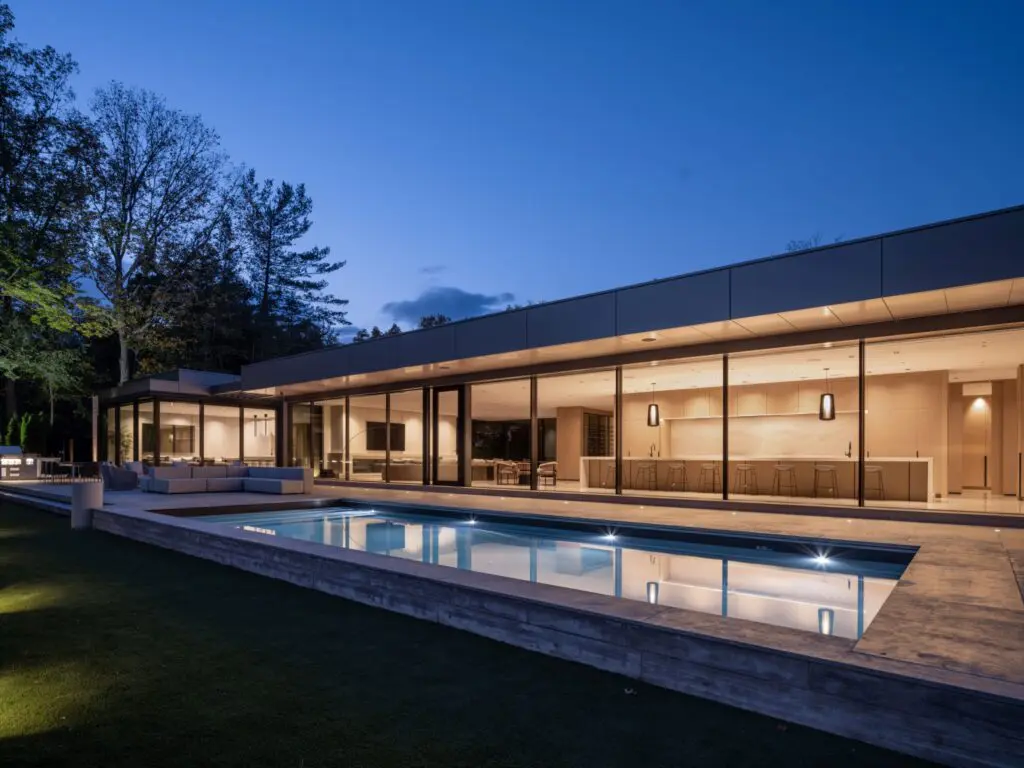
This is custom residential architecture driven by use, not spectacle—where details serve how people actually move, gather, and live.
Privacy Through Subtle Shifts
The private wing of the house is positioned along the east side of the site to capture morning light. Bedrooms are flooded with soft, early sun, reinforcing daily rhythms and a sense of calm.
A subtle elevation change—six steps down from the main floor—marks the transition into this zone. Rather than relying on doors or signage, the architecture itself communicates privacy. The shift is intuitive: this is a space meant for retreat.
The Landscape as a Final Room
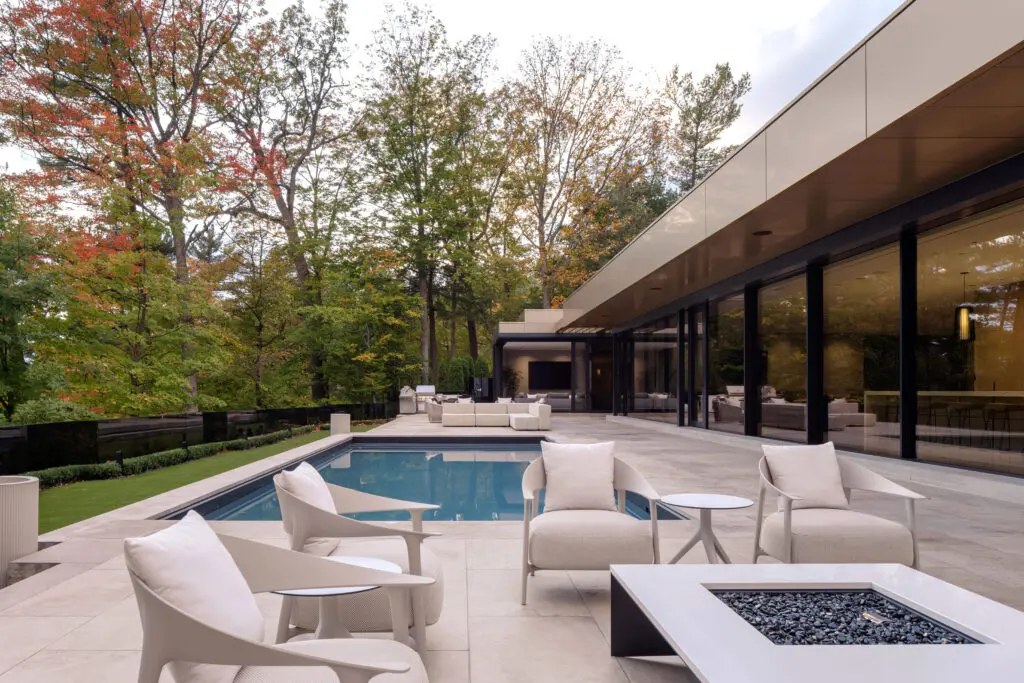
Perhaps the most successful element of the project is the rear yard. Fully integrated with the architecture, it opens directly from the main living spaces and capitalizes on the site’s depth, views, and orientation. The house does not end at the glass—it extends outward, forming a continuous relationship between interior, terrace, and landscape.
Architecture Built on Moments
Clubhouse is not defined by a single gesture, but by a series of moments: the acoustic quiet of the entry promenade, the ascent of the staircase, the changing light across stone and wood, the view from the fireplace on a winter afternoon.
Every hour, every season, the house reveals something different.
This is the power of site-specific design—architecture that doesn’t just occupy land, but responds to it, amplifies it, and ultimately disappears into experience.
Mission accomplished.