

A Complete Guide to Contemporary Cottage Designs
Muskoka has a way of making everything feel slower. The exposed rock, the dense tree cover, the sound of the water–it pulls you out of the city rhythm the moment you arrive. It also ranks among the most challenging places to build in Ontario. And for those who want something beyond an A-frame or a standard post-and-beam, contemporary cottage design offers an approach that meets this landscape on its own terms.
At FrankFranco Architects, we’ve spent years working throughout cottage country. We take a straightforward approach to Muskoka cottage design, starting with the first site visit and continuing through to the decisions that shape how a cottage is lived in.
Start with the Land, Not the Plans
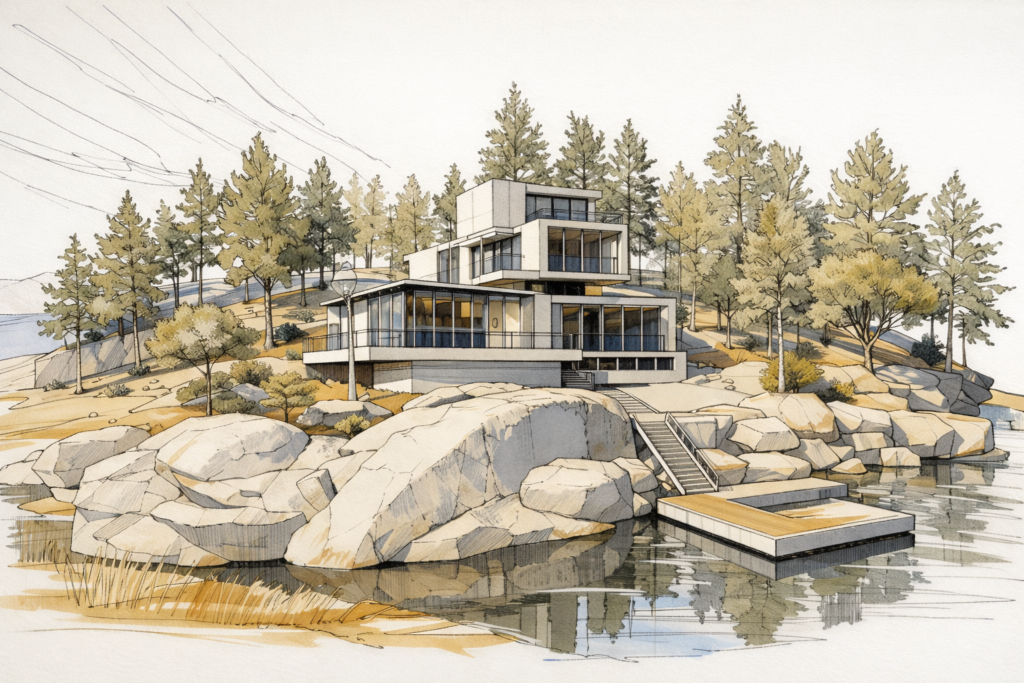
Most of the terrain in Muskoka is exposed Canadian Shield, either bare rock or a thin layer of soil over rock. Water levels on the lakes are managed, which means they’re relatively fixed, and most properties slope toward the water with road access coming in from the rear.
This isn’t a canvas you flatten and build on. It’s a landscape you navigate. In practice, that means the building has to follow the grade rather than fight against it. We step the structure down the terrain toward the waterfront, much like a staircase. Sometimes that requires blasting–not to level the site, but to create a precise foundation footprint that works with the rock, rather than against it.
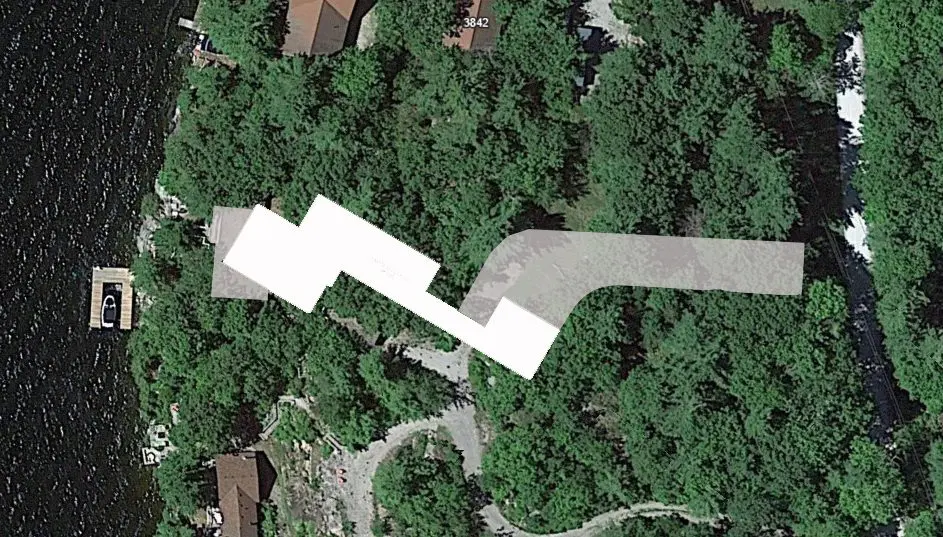
We also think carefully about how the cottage is used day-to-day. If your car parks at the top of the property, your garage should be there too. You don’t want to be carrying groceries across a suspended walkway or down a steep grade. Getting the circulation right, how you move from arrival to water, is one of the most underrated parts of a well-designed cottage.
Does Contemporary Architecture Belong in Cottage Country?
It’s a fair question, and one we hear often. The cottage vernacular in Ontario is largely defined by log cabins, heritage camps, and A-frame chalets. Contemporary cottage design can feel at odds with that.
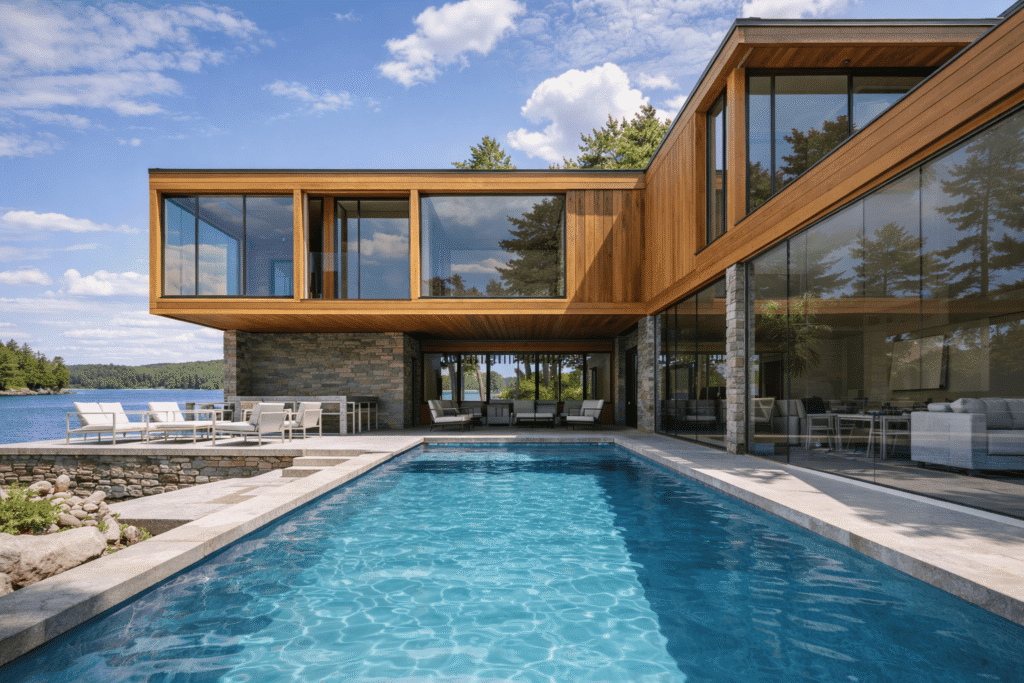
Our view is the opposite. Modern architecture is actually one of the better fits for this environment. The principles are aligned: honest materials, connection to light, a strong relationship between inside and outside. Where a traditional cottage might use small windows that separate you from the view, a contemporary Muskoka cottage uses expansive glazing so that even when you’re indoors, the landscape is always present.
A well-designed modern cottage doesn’t compete with its surroundings. It frames them. The goal is never to impose a building on the site, but to let the landscape come forward.
How to Design Waterfront Properties
Maximizing a waterfront property isn’t about building the largest structure possible. It’s about maximizing your engagement with the water.
That starts with orientation. Primary views should be framed through windows, with living spaces oriented toward the lake. But it extends well beyond the building itself. Decks, docks, and patios act as a quiet threshold where the lake remains the focus.
We also think carefully about the sequence of movement from the cottage to the water. Leaving the kitchen, stepping onto the deck, passing the fire pit, crossing the lawn to the dock, that path should feel deliberate. Each transition is an opportunity to slow you down, to shift you from the interior rhythm of the house to the experience of being at the water. Designing waterfront properties well requires attention to the whole approach, not just the view from the cottage.
Privacy on the Water
Muskoka properties tend to be generously spaced, but privacy is still a consideration, especially on busier lakes. Contemporary cottage design handles this through layering.
An elevated main floor with an adjacent outdoor deck can function as a natural screen. When you’re standing on the dock and looking toward the cottage, your sightline meets the exterior of the building, not the interior. People inside have unobstructed views out; people on the water don’t see in.

Beyond that, it comes down to how openings are placed, where the glass goes, which directions windows face, and how sight lines are managed across the site. When done well, it creates a sense of openness without feeling exposed.
Navigating the Approval Process
Building in cottage country involves more than a standard building permit. In Muskoka, the process is shaped by smaller municipal building departments, each with its own requirements and review timelines. You may find yourself working with Bracebridge, Gravenhurst, Huntsville, Muskoka Lakes, or Lake of Bays, where committees of adjustment, rezoning applications, and strict shoreline protection regulations often come into play due to the sensitivity of waterfront properties.
This is where choosing the right cottage architects in Ontario becomes important. You need a team who not only understands how to design a cottage, but also how to navigate local approvals without losing time or scope. The same holds true in nearby cottage regions like Haliburton County, including Minden Hills, Algonquin Highlands, and Highlands East, as well as Kawartha Lakes, Parry Sound District, and SImcoe County, where each municipality operates its own building department and permitting framework. We’ve worked within these systems, and that experience carries through every project we take on.
The Most Important Question to Answer First
Before any design decisions are made, we ask the same question at the start of every cottage project: how is this place actually going to be used?
Is it a weekend escape from the city? A full summer home for extended family? A year-round residence or retirement plan? Will it be rented out? Do the kids go up independently? Do you boat, fish, ski, or mostly read on the dock?
These answers shape everything. A Muskoka cottage designed for a couple who wants a quiet retreat looks completely different from one designed for three generations of a family who use it from May through October. Neither is better. But the design has to reflect how you actually live, not just how it photographs.
At the end of the day, great contemporary cottage design isn’t about what’s trending. It’s about how you want to feel when you walk in the door. Our job is to listen carefully, and then build an environment that creates those conditions every time.
Ready to start planning your Muskoka cottage?
Based in Toronto, FrankFranco Architects works with clients across Ontario who are building in some of the province’s most demanding and rewarding environments. If you’re planning a contemporary cottage design in Muskoka or elsewhere in cottage country, we’d like to hear about it.

Work With Us
We are a Toronto-based residential architect studio with over twenty years of experience designing modern homes across the city and its surroundings. We are known for site-specific design, material discipline, and a client process built on genuine listening. We take on a limited number of projects each year, the kind of constraint that keeps the work honest.
If you are exploring a residential build or renovation and want to work with a team that will bring considered design to your project, we would like to hear about it.